
Tending to the acoustics of any environment is an essential part of creating a space that is pleasant, comfortable and appealing; which is what makes SuperPhon Acoustic Panels so popular. Providing good acoustics has a direct, positive impact on people’s productivity, happiness and general wellbeing, which makes it extremely valuable in educational settings such as schools and universities, as well as work places, both commercial and industrial.
When it comes to creating a harmonious environment there are a few key comfort factors to consider such as sound, light, temperature and humidity. If these factors are successfully controlled you are producing the perfect conditions for socialising, learning and working which benefits individuals and establishments as a whole.
One of the main contributing factors to uncomfortable noise pollution is reverberation, which is significantly heightened in spaces with large expanses of empty, hard surfaces such as schools, offices and even restaurants. Exposed soffits, extensive wooden floors and large areas of glazing create a space that is vulnerable to reverberation disturbance.
Reverberation occurs when sound waves travel through a room and reflect off hard surfaces. Noise such as talking, audio and TV sources, machinery and even processes such as food preparation can all add to reverberation and create an unpleasant environment that limits productivity and comfort. This massively reduces the quality of customer experience in places such as restaurants, and hinders performance in places such as schools and offices.
Another contributing factor to reverberation can be a room’s geometry. An oddly shaped room can alter the path of sound waves, which causes them to reflect back into the room in unusual ways. Unlike an echo, which repeats a sound back to you with clarity, reverberation causes sounds to persistently refract and scatter after the source of the sound has stopped.
Unwanted and undesirable background noise can cause a number of issues, which is why it’s important to consider a room’s acoustics, especially when it will be frequented by potentially large volumes of people.
Consider the Lombard Effect. This refers to the phenomenon whereby everyone in the room raises their voice in small increments to compete against each other, until everybody in the room is shouting above one another in order to be heard. The larger the volume of people, the louder the reverberation gets. Now imagine what costs this can have for people who are trying to learn, work or socialise.
Loss of concentration and focus;
Noise can be a huge distraction that pulls focus from work and disrupts concentration levels, which increases errors and limits productivity. In educational and workplace settings this can have huge consequences on the quality of learning and work being outputted.
However, effectively managing noise in rooms has been proven to increase concentration, which in turn increases productivity and the level of work accomplished.
Difficulty holding conversations;
When noise becomes excessive it makes it extremely difficult to hold a conversation, whether it be a catch up with a friend over coffee, or a business meeting. Reverberation makes an establishment uncomfortable and unpleasant which lessens its appeal.
In commercial settings such as bars, restaurants and coffee shops this can be detrimental to business.
Speech intelligibility;
Having the ability to understand what is being said is a significantly important issue in educational settings, as well as sensitive settings such as health and social care, and even in workplaces such as call centres.
Students’ engagement relies heavily on their understanding of a topic, so the acoustics of a room must be considered. In places such as call centres, customer service is imperative but bad acoustics can make it difficult to speak to and hear customers.
Ultimately, the main worry of unwanted noise are the physiological effects that prolonged exposure can have on people such as increased stress, a raised heart rate and many other health-related issues. These things will not only affect individuals, but also affect businesses and educational institutions as people are more likely to be absent.
Acoustic wall and ceiling panels work by covering hard surfaces such as plastered walls and ceilings with acoustically absorbent material, which reduces sound reverberation by preventing sound waves from reflecting back into a room.
SuperPhon acoustic panels are extremely effective at performing this role due to their perfect composition. The panels include a permeable, acoustically transparent woven textile fabric on their external face that allows sound waves to pass through it and into the absorptive material of the SuperPhon panel itself.
The panels offer Class ‘A’ acoustic performance, which is the highest level of sound absorption. They can be easily installed and mounted on walls and ceilings, and are perfect for retrofit applications.
Not only are SuperPhon acoustic panels great at improving the acoustics of a room, they also offer an aesthetically pleasing solution that can be used to enhance any space. The panels come in a vast catalogue of colours, and can also be custom made to your own bespoke design and specifications.
Their adaptability is what sets them apart from other acoustic solutions. SuperPhon acoustic panels come in a variety of thicknesses and panel sizes so they can work effectively in all manners of environments including universities, offices, restaurants and music studios.
You can use the panels as an accent or feature with partial wall coverage, or have complete wall coverage for high impact in a large space. Choose from the vast range of colours available, or have them custom made to create an artistic feature, or promote your business with branding and advertisements. Whatever the situation, SuperPhon can offer an effective soundproofing solution.
Acoustics in schools – Building Bulletin 93 (BB93)
Schools need to give special attention to noise conditions because they can have a severe impact on children’s ability to learn and retain information. Rooms require reverberation to be kept to a minimum, which means that a room’s design needs careful consideration.
The standards that apply here are published in Building Bulletin 93 – BB93. Originally published in 2004 to provide a design guide for acoustics in new school buildings, the latest version of BB93 from February 2015 provides performance standards, acoustic criteria, acoustic principles and good acoustic design practice for schools.
BB93 aims to ensure a higher standard of design and construction for school buildings so they can provide good acoustic conditions that nurture teaching and learning in that environment. The acoustic criteria the bulletin sets out regards noise intrusion from external sources, sound insulation requirements between rooms, and noise control of reverberation times within rooms.
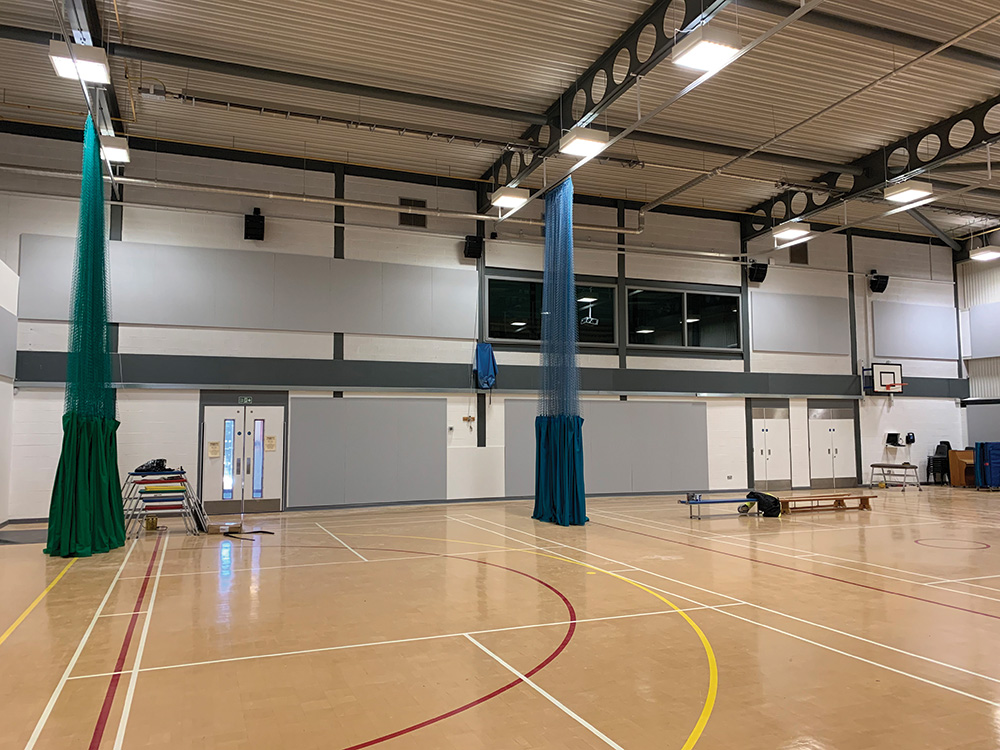
It is important to assess acoustics in every room, not just classrooms or lecture theatres. Schools must consider the acoustic conditions of any communal areas such as common rooms, as well as music rooms, libraries and even sports halls.
SuperPhon panels are the perfect addition to schools due to their versatility. They can make a difference in all kinds of educational building applications, and their vast range of colours means that they can be used to create a vibrant, fun environment that will help increase productivity.
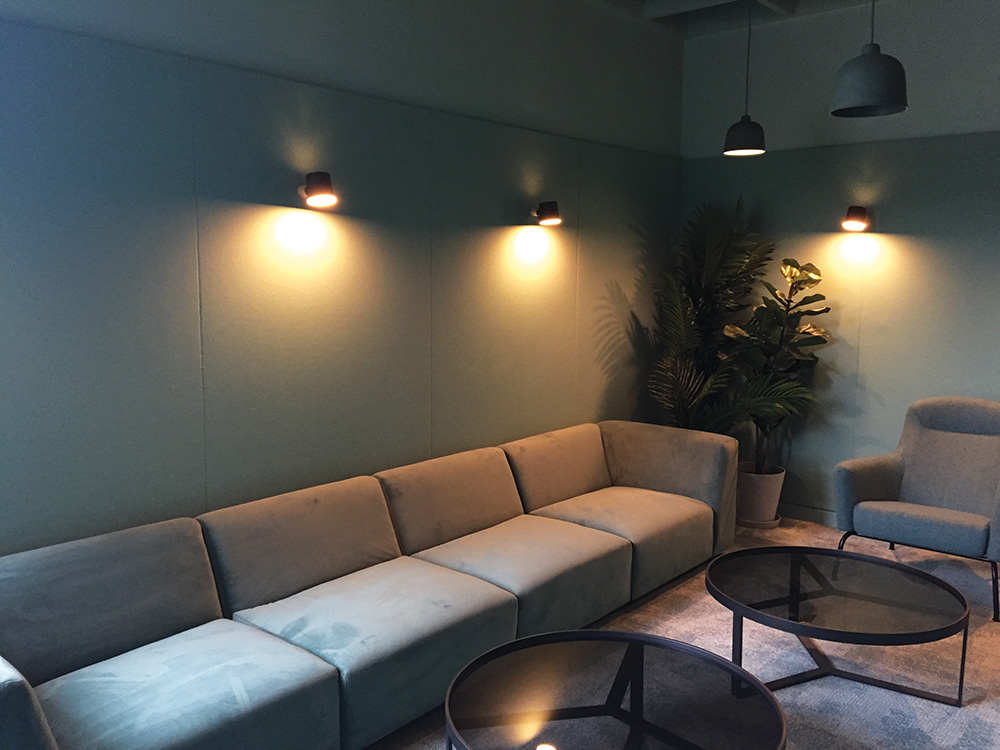
As stated earlier, in places such as restaurants, bars and cafes, getting the acoustics right is just as important as other factors such as light and temperature. The aim is always to create a comfortable and pleasant space that people want to spend time in and give business to. SuperPhon panels can be custom made to create an artistic feature which is perfect for commercial establishments as they won’t take away from the ambience, but become a part of the decor.
In offices, call centres and places of work acoustic conditions are important for productivity and focus, as well as the general wellbeing of employees. SuperPhon panels can massively improve working environments, and can be designed with company branding or values etc to suit your business and space.
There are numerous different applications for SuperPhon acoustic panels including; churches, cinemas and reception halls. Their adaptability makes them an ideal solution for most situations and environments.
In some circumstances, acoustic control can be fundamental to a room’s main purpose. Treating a music venue or studio can help add clarity and warmth to the music and limit disturbances. In closely controlled environments such as science laboratories, unwanted noise can actually have an adverse impact on the work being undertaken.
SuperPhon acoustic tiles offer endless possibilities to enhance any space due to their flexibility in application, design and style.

The UK Building Regulations address reverberation in Approved Document E which applies to reverberation time in communal areas of residential buildings such as stairwells, corridors and entrance halls. SuperPhon panels are a great solution for helping pass Part E requirements, while still remaining aesthetically pleasing.
Although there are no legal obligations to improve acoustic control inside our homes, there are some instances where SuperPhon can help to improve the comfort of your home. We have seen a growth in the popularity of home offices, cinemas and gyms etc that has resulted in the need for acoustic treatment as the rooms were not built with noise control in mind for their original purposes.
SuperPhon can effectively upgrade properties to make them suitable for their new uses. Or, if you’re just struggling with soundproofing in bedrooms or living rooms etc., they can be equally as effective at improving the comfort of your home.
There are a few ways to test the acoustic quality of a room and reverberation, but the most common is known as the ‘interrupted noise method’. This process is quite simple and involves the use of ‘pink noise’. Pink noise is played at a certain decibel (dB) level, and then immediately cut off. The time it takes for the sound to drop below 60 dB is measured, which gives a RT60 measurement.
You can use a more subjective method to assess how reverberant a room is by simply listening with the human ear. You won’t get an exact value, but you will be able to tell if you could benefit from improving the room’s acoustics.
More complex methods of testing reverberation also exist using modelling software. If you want an exact assessment there are qualified acoustic testing specialists that can provide this service.
SuperPhon acoustic panels offer a flexible and stylish acoustic solution with unlimited design potential. SuperPhon panels are a composite construction that offer a woven textile fabric-covered solution for reducing sound reverberation. Their style and application versatility makes them an aesthetically pleasing solution with excellent reverberation control, particularly suited to larger commercial and educational spaces.
If you require assistance on deciding what is the best soundproofing solution for you, speak to one of our specialists who will be more than happy to help.